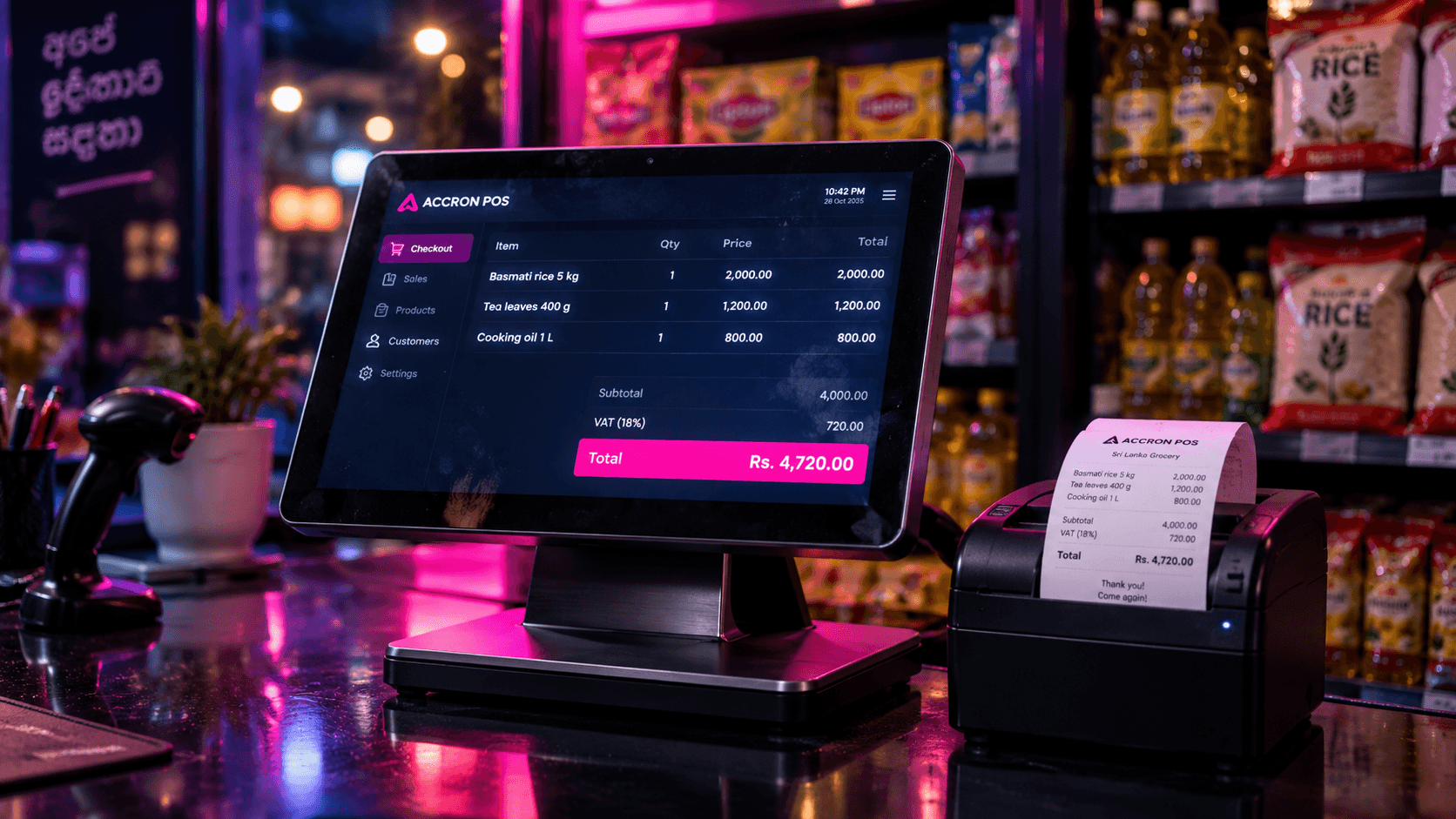
If you run a shop, restaurant or service business in Sri Lanka, VAT compliance is moving to the till. The reason isn't a lower registration threshold, because that proposal was dropped. It's a new rule that VAT-registered businesses must use a secured point-of-sale system. The start date isn't fixed yet, so you have time to get ready.
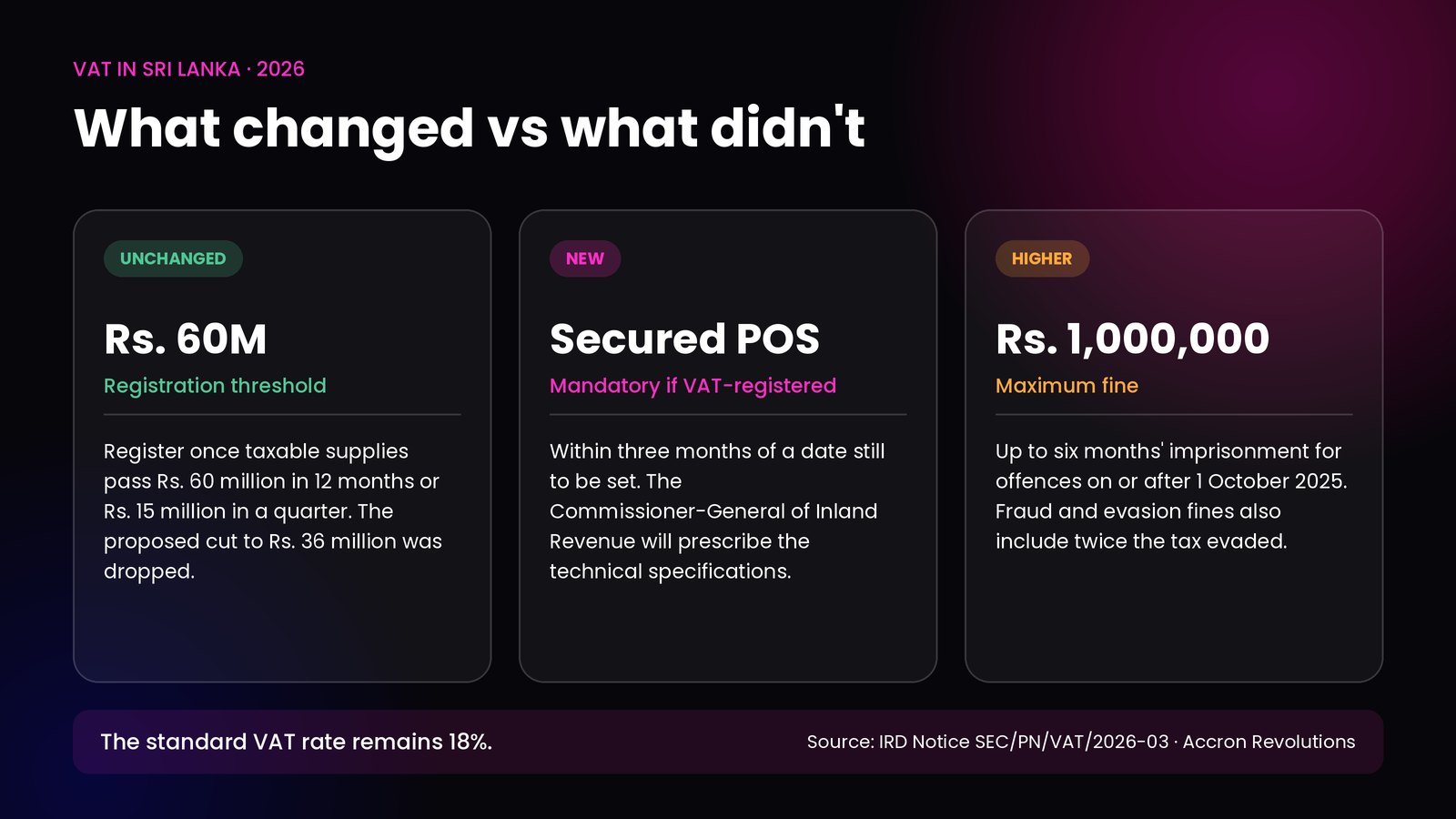
What changed in 2026, and what didn't
The threshold stays the same. You must register once taxable supplies pass Rs. 60 million in a 12-month period or Rs. 15 million in a quarter. If you read that the limit fell to Rs. 36 million, you saw an earlier draft of the bill.
Secured POS is coming. Every VAT-registered person must use secured POS machines within three months of a date still to be set. The rule exists so that transactions can be recorded accurately and turnover can be monitored in real time. The Commissioner-General of Inland Revenue will set the technical specifications.
Penalties went up. For offences on or after 1 October 2025, fines can reach Rs. 1,000,000, and imprisonment can run up to six months. Fraud and evasion fines also include twice the tax evaded. The standard VAT rate remains 18%.
Who this affects. If you're VAT-registered, or your sales are approaching Rs. 15 million in a quarter, your POS needs to be ready. If you're well below the threshold, you aren't affected yet, but the business you grow into will be.
What "VAT-ready" means for a POS system
Many owners hear "secured POS" and assume they must replace everything. In most cases the system just has to do these things properly:
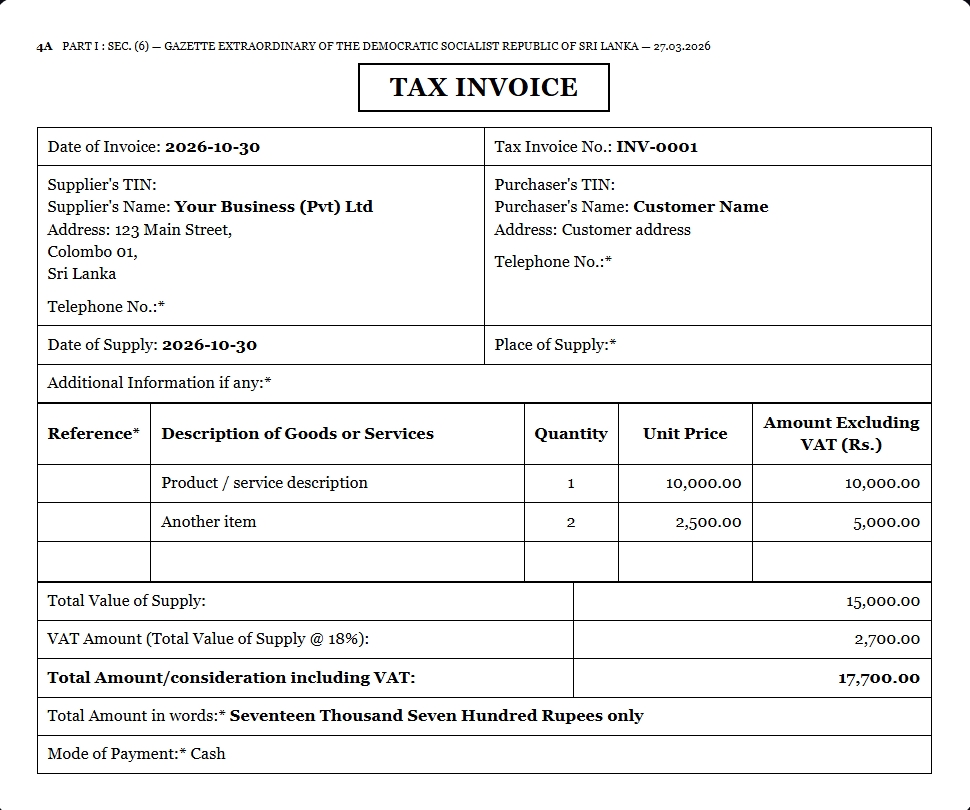
- Show VAT on every receipt. Each taxable sale needs a clear VAT line, not just a rounded total. If you only need to issue the odd invoice, try our free VAT invoice generator for Sri Lanka.
- Log transactions as they happen. Records should be reconcilable and ready to be transmitted without manual re-entry if the IRD requires it.
- Make filing periods easy. You should be able to pull clean numbers for any quarter, not just an annual summary.
- Keep an audit-ready history. Edited or deleted sales should leave a trace. Inconsistent records are what tougher enforcement is designed to catch.
The "without extra paperwork" part
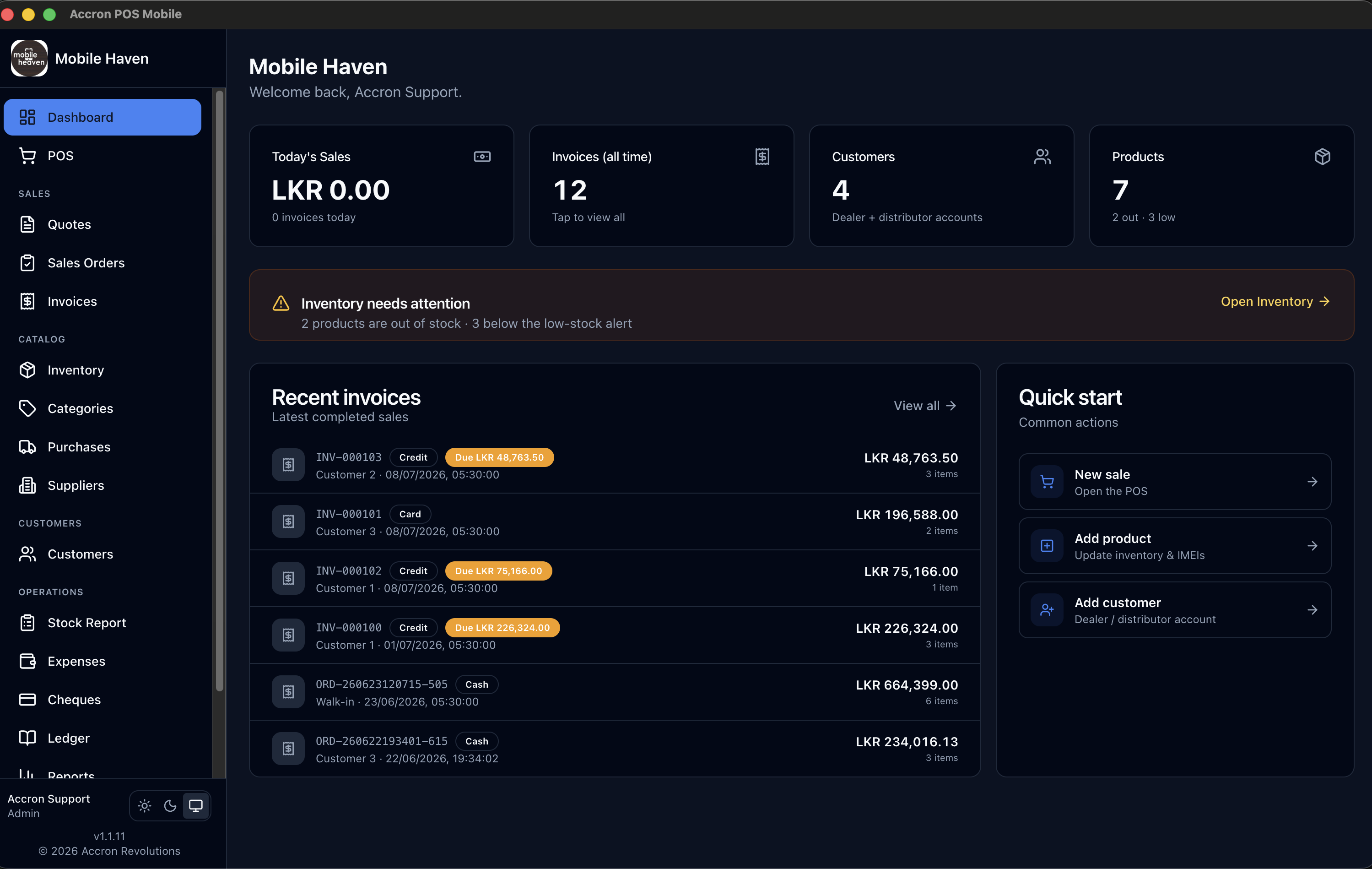
The businesses that struggle with VAT are usually still doing it by hand: a paper VAT register, a spreadsheet reconciled at month-end, receipts copied into a ledger. A good POS removes most of that, because the record-keeping happens when the sale happens. You're not adding a compliance process. The till becomes the compliance process. Barcode scanning, VAT calculation and reporting all happen in the same step your cashier already does dozens of times a day.
5 questions to ask before you buy or upgrade
- Does it calculate and show VAT per line item, not only at checkout?
- Can it produce clean reports for your filing period, quarterly or annual?
- Is the data tamper-evident, so edited or deleted sales can be traced?
- Does it support how your customers actually pay: cash, cards and mobile payments?
- Will the vendor update the system when the IRD publishes the secured POS specifications, or is that your problem after installation?
The last question matters most. Sri Lanka's VAT rules have changed several times in two years, and a system that is never updated will drift out of compliance even if you change nothing about how you use it.
Frequently asked questions
Has the VAT registration threshold in Sri Lanka changed?
No. The proposed cut to Rs. 36 million did not make it into the Act. The threshold remains Rs. 60 million per year or Rs. 15 million per quarter.
Do I need an IRD-approved POS system?
VAT-registered businesses will need a secured POS system, but the specifications and start date are still to be prescribed. Be wary of anyone claiming "IRD approval" before the IRD has published its requirements.
What happens if I don't comply?
Penalties can include fines of up to Rs. 1,000,000 and up to six months' imprisonment, depending on the offence.
The bottom line
Secured POS is coming for every VAT-registered business in Sri Lanka, and the shops that do best will be the ones whose till handles VAT quietly in the background: accurate tax on every receipt, clean records for every period, and nothing extra for staff to remember. If you're not sure your current system is ready, check it before your next filing period, not after.
Want to see how Accron POS handles VAT, stock and sales reports in one system? Talk to us →
This article is general information, not tax or legal advice. Check the Inland Revenue Department website for the latest notices.
Sources
- Inland Revenue Department, Sri Lanka, Value Added Tax (Amendment) Act No. 14 of 2026, Notice to Taxpayers SEC/PN/VAT/2026-03, 3 July 2026.
- Newswire.lk, Explained: 9 key changes under Sri Lanka's new VAT law, 4 July 2026.